

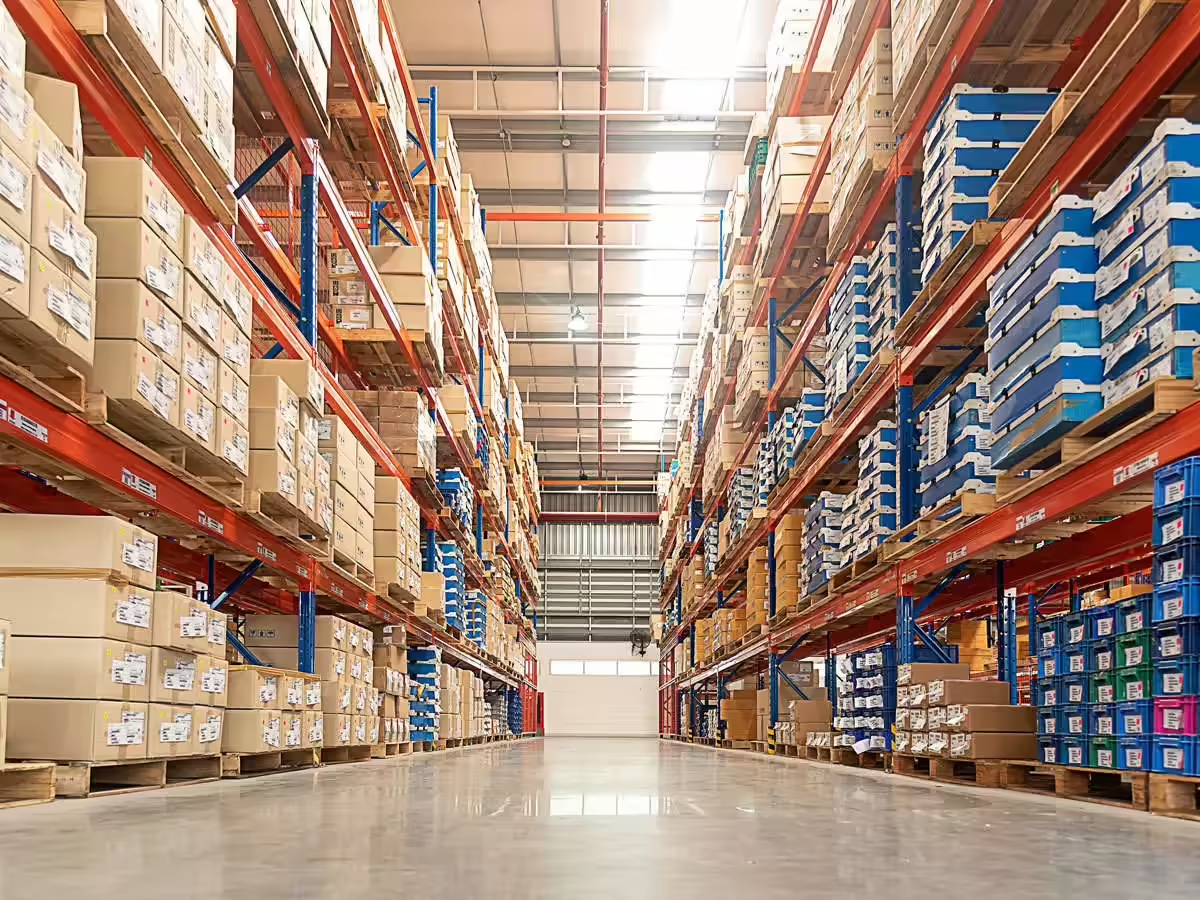
For many ecommerce businesses, warehousing begins as a relatively straightforward operational function. Products arrive from suppliers, inventory is stored on shelves, orders are packed when they come in, and shipments move out the door. In the early stages of growth, this setup feels sufficient because operational complexity remains manageable.
But as businesses scale, something important changes—often without leadership fully recognizing it at first. The warehouse stops functioning merely as a place to store products and gradually becomes the operational infrastructure that determines how efficiently the entire business can grow.
This transition is subtle but extremely important. Businesses that continue treating warehousing as “just storage” often struggle with rising operational costs, slower fulfillment, inconsistent customer experiences, and scaling bottlenecks. Meanwhile, companies that recognize the shift early begin designing their warehouse operations strategically, turning fulfillment into a competitive advantage rather than an operational burden.
The difference between these two outcomes often comes down to understanding the evolving role of the warehouse itself.
Why Warehouses Are No Longer Passive Spaces
Historically, warehouses were designed around a relatively static model. Inventory arrived in bulk, remained stored for extended periods, and moved outward according to predictable replenishment cycles. Efficiency was measured primarily through storage utilization and labor management.
Modern ecommerce has changed this dynamic completely.
Today’s warehouse environments are defined by constant movement rather than static storage. Inventory enters and exits continuously. Orders arrive across multiple channels simultaneously. Customer expectations require faster processing times, flexible delivery options, and near real-time inventory visibility.
In this environment, warehouses no longer operate as passive storage facilities. They function as high-speed operational systems responsible for coordinating inventory flow, order prioritization, fulfillment execution, and inventory accuracy simultaneously.
This shift becomes especially visible once businesses expand beyond a single sales channel or fulfillment location. Complexity increases rapidly because inventory must now support:
- Ecommerce websites
- Online marketplaces
- Retail replenishment
- Wholesale fulfillment
- Social commerce
- Regional distribution networks
As these operational layers grow, the warehouse becomes central to maintaining coordination across the business.
The Problem With Treating Modern Fulfillment Like Traditional Storage
One of the most common operational mistakes growing ecommerce companies make is assuming that adding more warehouse space automatically solves fulfillment challenges.
At first glance, this seems logical. More orders should require more storage capacity. But in reality, scaling fulfillment successfully depends less on physical space and more on operational flow.
Businesses often encounter several problems when warehouses are treated primarily as storage environments:
1. Inventory Becomes Harder to Locate
As SKU counts increase, inefficient warehouse layouts begin slowing down picking and replenishment activities. Teams spend more time searching for products rather than fulfilling orders.
2. Operational Bottlenecks Expand During Growth
Warehouse processes that worked at lower order volumes begin collapsing during seasonal spikes, promotions, or marketplace campaigns.
3. Labor Costs Increase Faster Than Efficiency
Without structured operational workflows, scaling fulfillment often requires adding disproportionately more labor simply to maintain service levels.
4. Inventory Visibility Weakens
As operational complexity grows, discrepancies between system inventory and physical inventory become more common, reducing confidence across fulfillment operations.
The core issue is that storage-focused warehouses are not designed for high-velocity ecommerce environments. Modern fulfillment requires operational coordination, not just inventory capacity.
Why Fulfillment Warehouses Operate Differently
This is why the distinction between a traditional warehouse and a fulfillment warehouse has become increasingly important in ecommerce operations.
Traditional warehouses are optimized primarily for inventory storage and long-term stock holding. Fulfillment warehouses, by contrast, are optimized for speed, order flow, and continuous inventory movement.
The difference is strategic, not just operational.
A fulfillment-oriented operation focuses heavily on:
- Faster order processing
- Efficient picking workflows
- Real-time inventory updates
- Dynamic order prioritization
- Optimized storage positioning
- Scalable operational coordination
In other words, the objective shifts from “storing inventory efficiently” to “moving inventory intelligently.”
This distinction becomes increasingly important as customer expectations continue rising. Faster delivery promises and omnichannel fulfillment models require businesses to optimize inventory movement rather than simply maximize storage density.
Why Warehouse Operations Now Influence Revenue Growth Directly
Many businesses still view warehousing primarily as a cost center. Operational discussions often focus on reducing storage costs, minimizing labor expenses, or improving fulfillment efficiency.
But increasingly, warehouse operations directly influence revenue performance as well.
This happens because fulfillment quality now affects several revenue-driving factors simultaneously:
Customer Retention
Reliable and fast fulfillment improves repeat purchase behavior significantly. Customers are far more likely to reorder from businesses they trust operationally.
Conversion Rates
Accurate inventory availability and predictable delivery timelines influence purchase decisions directly.
Marketplace Performance
Many marketplaces reward strong fulfillment performance with greater visibility and seller credibility.
Expansion Capability
Businesses with scalable warehouse operations can expand into new channels, markets, or regions far more confidently.
As a result, fulfillment efficiency is no longer merely operational optimization—it becomes growth infrastructure.
The Role of Warehouse Management Software in Operational Scalability
As warehouse operations become more central to business performance, manual coordination becomes increasingly unsustainable.
This is where warehouse management software becomes strategically important. Modern warehouse systems do much more than track inventory locations. They help businesses coordinate warehouse execution systematically at scale.
A strong WMS platform supports:
- Real-time inventory synchronization
- Intelligent picking workflows
- Warehouse slotting optimization
- Labor coordination
- Automated replenishment logic
- Inventory movement tracking
- Operational performance visibility
Industry research consistently highlights improvements in inventory accuracy, order fulfillment speed, and warehouse productivity among the primary benefits of warehouse management systems.
More importantly, warehouse systems create operational consistency. Instead of relying heavily on tribal knowledge or manual oversight, businesses establish repeatable workflows capable of scaling alongside demand growth.
This operational consistency becomes especially valuable during periods of rapid growth or peak seasonal demand when manual processes tend to break down first.
Why Inventory Flow Matters More Than Inventory Volume
One of the most important mindset shifts ecommerce businesses eventually make is understanding that inventory movement matters more than inventory ownership.
Many businesses initially focus heavily on stock availability and warehouse expansion. But over time, operational leaders realize that slow-moving inventory often creates more problems than inventory shortages themselves.
Inventory sitting inside a warehouse without efficient turnover:
- Ties up working capital
- Increases storage costs
- Creates picking inefficiencies
- Reduces operational flexibility
- Raises markdown risk
Efficient fulfillment operations therefore prioritize inventory flow optimization rather than maximum inventory accumulation.
This is another reason fulfillment warehouses differ structurally from traditional storage warehouses—they are designed around throughput velocity instead of storage permanence.
Why Scalability Depends on Operational Predictability
One of the biggest operational differences between smaller ecommerce businesses and large-scale ecommerce operations is predictability.
Smaller businesses often operate reactively. Teams solve problems manually as they emerge. Warehouse coordination relies heavily on experienced staff members and operational workarounds.
At larger scales, this approach becomes fragile. Growth amplifies inefficiencies quickly.
Scalable warehouse operations depend on predictable systems where:
- Inventory updates continuously
- Fulfillment workflows follow structured logic
- Exceptions are identified early
- Labor allocation adjusts dynamically
- Operational visibility remains consistent across locations
Warehouse management systems help create this predictability by standardizing operational execution.
The result is not just higher efficiency—it is operational stability during growth.
The Future of Ecommerce Warehousing Is Strategic, Not Operational
The most important shift happening in ecommerce fulfillment today is that warehousing is moving from an operational support role to a strategic business role.
Warehouses now influence:
- Customer experience quality
- Delivery competitiveness
- Expansion scalability
- Working capital efficiency
- Revenue consistency
Businesses that continue treating warehouses primarily as storage environments may struggle increasingly as ecommerce complexity grows.
Meanwhile, companies investing in fulfillment infrastructure, warehouse technology, and operational coordination are building long-term advantages that extend far beyond logistics.
Conclusion
As ecommerce businesses grow, the role of the warehouse evolves dramatically. What begins as a simple storage function gradually becomes the operational infrastructure supporting fulfillment speed, inventory coordination, scalability, and customer experience.
Understanding the difference between traditional warehousing and a modern fulfillment warehouse is becoming increasingly important for companies looking to scale sustainably. By combining operationally optimized fulfillment models with advanced warehouse management software, businesses can move beyond reactive inventory storage and build fulfillment systems designed for long-term growth.
In modern ecommerce, the warehouse is no longer just where inventory sits. Increasingly, it is where business performance is determined.