

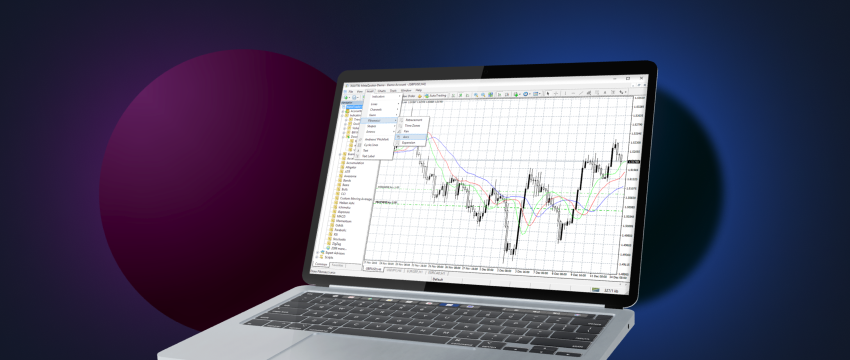
The global foreign exchange market, commonly known as forex, is one of the most dynamic and liquid financial arenas in the world. It provides endless opportunities for both new and seasoned traders to profit from currency price fluctuations. However, Forex Trading successfully requires more than just market participation. It demands a combination of technical understanding, strategic discipline, and emotional control. This comprehensive guide explores the techniques that both beginners and experienced investors can use to build an informed and effective approach to forex trading.
Understanding the Forex Market
Forex trading involves the exchange of one currency for another, with the aim of capitalizing on fluctuations in exchange rates. Currencies are traded in pairs, such as EUR/USD or GBP/JPY, where the first currency is the base and the second is the quote currency. When a trader buys a currency pair, they are buying the base currency and simultaneously selling the quote currency.
The forex market operates 24 hours a day, five days a week, across major global financial centers. This constant activity ensures liquidity and provides traders with flexibility to enter or exit trades at almost any time. Market participants include banks, corporations, hedge funds, governments, and retail traders, each contributing to the market’s depth and volatility.
Key Factors Influencing Currency Prices
Currency prices are affected by multiple economic, political, and psychological factors. Some of the most influential include:
- Interest rates – Changes in interest rates can affect a currency’s demand. Typically, higher interest rates attract investors seeking better returns, while lower rates tend to reduce demand.
- Economic indicators – Data such as GDP growth, inflation rates, and employment reports provide insights into a nation’s economic health, influencing currency valuation.
- Political stability – Countries with stable governments and predictable policies tend to have stronger currencies. Political turmoil, on the other hand, may lead to volatility and uncertainty.
- Market sentiment – Traders’ perceptions and risk appetite can move markets even in the absence of concrete data. Understanding sentiment is essential for timing trades effectively.
Fundamental Analysis in Forex Trading
Fundamental analysis is the study of economic, social, and political factors that influence currency values. Traders who rely on this technique often monitor economic reports, interest rate decisions, and central bank statements to anticipate market direction.
For example, if a country’s central bank indicates an intention to raise interest rates, traders may expect the national currency to strengthen. Similarly, reports showing strong employment growth or increased consumer spending can support bullish market sentiment toward that currency.
Fundamental traders often plan their positions around economic calendars, identifying key events such as policy announcements or data releases. This proactive approach helps them prepare for potential market reactions rather than responding impulsively after events occur.
Technical Analysis and Chart Patterns
Technical analysis is one of the most widely used approaches in forex trading. It focuses on price charts and historical market data to identify trends and patterns. The underlying assumption is that market movements follow recognizable behaviors that tend to repeat over time.
Common tools used in technical analysis include moving averages, oscillators, and Fibonacci retracements. Moving averages help smooth price fluctuations and identify trend direction, while oscillators such as the Relative Strength Index (RSI) and Stochastic indicators reveal overbought or oversold conditions.
Chart patterns are also powerful visual cues for predicting market direction. Examples include:
- Head and Shoulders: Suggests a potential reversal in trend.
- Double Top and Double Bottom: Indicate areas of resistance and support, often signaling reversals.
- Triangles and Flags: Represent consolidation before a continuation of the existing trend.
Experienced traders often combine several technical indicators to confirm signals and reduce the chances of false entries.
Risk Management Strategies
Regardless of experience level, effective risk management is the cornerstone of successful forex trading. The goal is not only to make profits but also to protect capital from large losses.
Traders commonly use stop-loss orders to automatically close positions when a trade moves against them beyond a predetermined point. This prevents emotional decision-making and limits potential damage. Take-profit orders are equally important, as they lock in gains once a target level is reached.
Position sizing is another essential aspect of risk control. Allocating only a small percentage of total capital to each trade ensures that a single losing position does not significantly affect overall performance. Diversifying across currency pairs and timeframes also helps spread risk.
Developing a Trading Plan
A trading plan acts as a roadmap, outlining entry and exit strategies, risk tolerance, and performance goals. Without a plan, traders are more likely to make impulsive decisions driven by emotion rather than logic.
A well-structured trading plan includes:
- Market analysis methods: Whether the trader relies primarily on technical, fundamental, or sentiment analysis.
- Entry and exit rules: Clear criteria for when to open or close trades.
- Risk parameters: Defined stop-loss and take-profit levels for each trade.
- Performance review: Regular assessment to refine strategies and correct recurring mistakes.
Consistency in following the plan helps traders develop discipline and confidence, which are vital traits for long-term success.
Psychological Discipline in Trading
Emotional control is often underestimated but is one of the most critical skills for forex traders. Fear and greed can lead to irrational decisions, such as chasing losses or overtrading. Maintaining emotional balance ensures that decisions are based on analysis rather than impulse.
Experienced traders often adopt a calm and detached mindset. They view losses as part of the learning process and focus on improving strategy rather than seeking revenge on the market. Developing this mental resilience allows traders to remain objective, even during periods of high volatility.
The Importance of Demo Trading
For beginners, practicing on a demo account before transitioning to live trading is invaluable. A demo account allows traders to apply strategies in a simulated environment using virtual funds. This helps them become familiar with the trading platform, test strategies, and gain confidence without financial risk.
Demo trading also allows experienced investors to refine new strategies before applying them in real markets. Once consistent performance is achieved in a demo environment, traders can gradually transition to live trading with small positions, building up over time.
Scalping, Day Trading, Swing Trading, and Position Trading
Different trading styles suit different personalities and goals. Understanding these techniques helps traders choose the approach that aligns best with their lifestyle and risk tolerance.
- Scalping: Involves making multiple small trades throughout the day to capture minor price movements. Scalpers rely on precision, quick decisions, and tight spreads.
- Day Trading: Traders open and close positions within the same day, avoiding overnight exposure. It requires strong analytical skills and constant market monitoring.
- Swing Trading: Focuses on capturing medium-term trends over several days or weeks. It suits traders who prefer a balance between frequent trading and longer-term analysis.
- Position Trading: Involves holding trades for weeks or months, based on major market trends. This approach requires patience and a strong understanding of macroeconomic fundamentals.
Each style demands specific techniques, time commitment, and emotional resilience, making self-awareness essential for choosing the right method.
Using Technology and Analytical Tools
Modern forex trading relies heavily on technology. Trading platforms provide advanced charting tools, automated trading options, and access to real-time market data. Automated systems can execute trades based on predefined algorithms, removing emotional bias and ensuring consistency.
Mobile trading apps have further enhanced flexibility, allowing traders to monitor and execute positions from anywhere. Analytical tools such as sentiment indicators and correlation matrices also help traders understand how different currency pairs move in relation to each other.
Continuous Learning and Adaptation
The forex market constantly evolves, influenced by changing global events and economic cycles. Continuous learning ensures traders remain adaptable and informed. Studying market trends, attending webinars, and reading analysis from experts can provide valuable insights.
Even experienced investors benefit from reviewing their performance regularly. Maintaining a trading journal that records each trade, along with reasoning and outcomes, helps identify strengths and weaknesses. Over time, this reflective practice leads to consistent improvement.
Conclusion
Forex trading is both an art and a science. It requires technical expertise, analytical thinking, and emotional control. Beginners must focus on understanding market fundamentals, mastering basic strategies, and practicing with discipline before committing real capital. Experienced investors, on the other hand, should continue refining their methods, adapting to changing conditions, and maintaining risk management as a priority.
The path to success in forex trading is not defined by rapid profits but by steady growth, informed decision-making, and resilience in the face of challenges. By combining sound strategy, disciplined execution, and continuous learning, both new and seasoned traders can navigate the forex market with confidence and skill.