

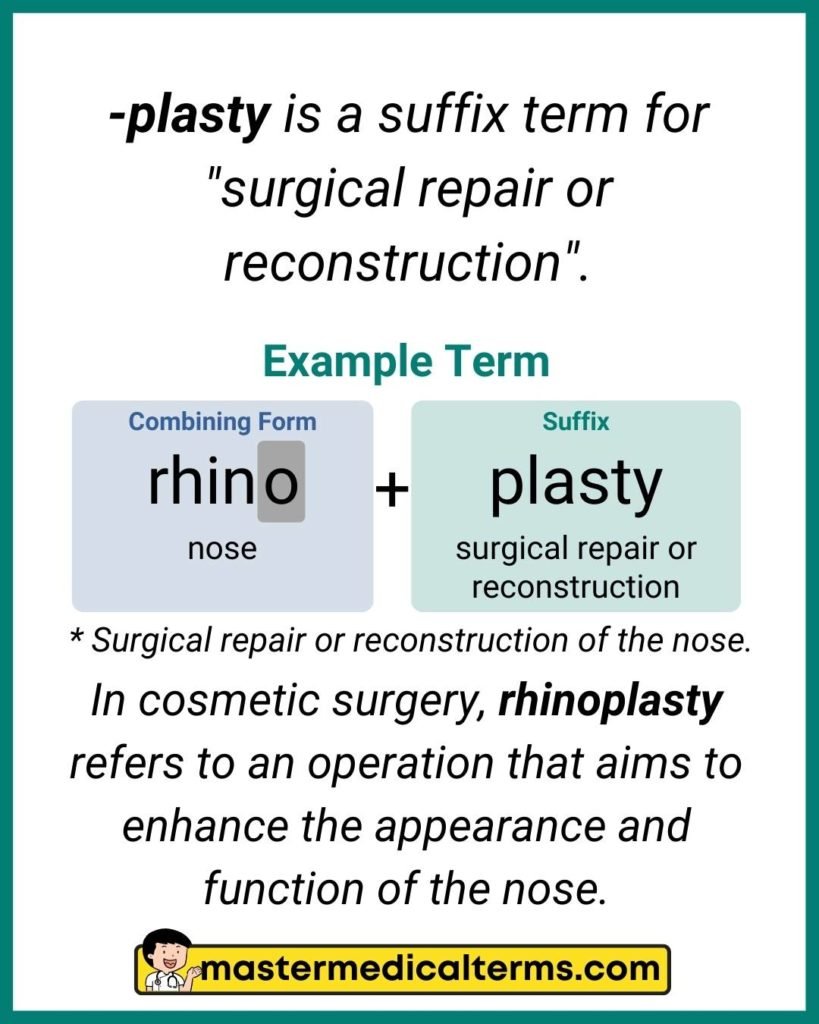
“Plasty medical term refers to a type of surgical procedure used to reshape or reconstruct a specific part of the body. Commonly used in plastic surgery, ‘plasty’ comes from the Greek word ‘plastikos,’ meaning ‘to mold or shape.’ This versatile term encompasses a wide range of procedures aimed at enhancing both form and function. From rhinoplasty to mammoplasty, plasty medical term offers innovative solutions to various cosmetic and reconstructive challenges. Let’s delve deeper into the fascinating world of ‘plasty’ procedures and their transformative impact on patients’ lives.”

The Fascinating World of Plasty Medical Term
Welcome to the world of medicine, where the use of unique terms and jargon can sometimes feel like a different language altogether. Today, we are going to dive into the intriguing realm of medical terminology and explore the multifaceted term “plasty.” So, what exactly does “plasty” mean in the medical field? Join us on this informative journey as we unravel the mysteries behind this intriguing term.
Understanding the Basics
Before we delve deeper into the specifics of “plasty,” let’s start with the basics. In medical terminology, the term “plasty” is derived from the Greek word “plastikos,” which means to mold or shape. When you encounter the suffix “-plasty” in a medical term, it typically refers to a surgical procedure that involves reshaping or reconstructing a particular part of the body.
The Role of Plastic Surgery
One of the most common associations with the term “plasty” is in the field of plastic surgery. Plastic surgery involves various procedures that aim to enhance or reconstruct different aspects of a person’s physical appearance. From facelifts to breast augmentations, the suffix “-plasty” is frequently used to describe these transformative surgeries.
Types of Plasty Procedures
Plasty procedures can encompass a wide range of surgical interventions that are designed to address specific medical conditions or aesthetic concerns. Some common types of plasty procedures include:
- Rhinoplasty: Also known as a nose job, rhinoplasty is a surgical procedure that focuses on reshaping the nose to improve its appearance or function.
- Mammoplasty: This type of plasty involves surgical procedures related to the breasts, such as breast augmentation, reduction, or reconstruction.
- Liposuction: While not technically a form of “-plasty,” liposuction is a popular cosmetic procedure that involves removing excess fat from various parts of the body to improve contours.
- Otoplasty: Otoplasty is a procedure that aims to reshape the ears for cosmetic or reconstructive purposes.
Exploring the Versatility of Plasty
While plastic surgery is perhaps the most well-known application of the term “plasty,” its uses extend far beyond the realm of cosmetic enhancements. Plasty procedures are used in various medical specialties to address a wide array of conditions and improve patients’ quality of life.
Reconstructive Plasty
One of the essential roles of plasty in medicine is in the field of reconstructive surgery. Reconstructive plasty procedures are aimed at restoring form and function to parts of the body that have been damaged due to trauma, disease, or congenital abnormalities. These surgeries can make a significant difference in a patient’s life by enhancing their physical appearance and restoring essential functions.
Functional Plasty
In addition to aesthetic enhancements, plasty procedures can also focus on improving the functional aspects of various body parts. For example, hand surgery often involves intricate plasty procedures to restore dexterity and mobility in patients with conditions such as carpal tunnel syndrome or traumatic injuries.
Orthopedic Plasty
Orthopedic surgery also utilizes plasty techniques to address issues related to the musculoskeletal system. Procedures such as arthroplasty, which involves replacing or reshaping damaged joints, play a crucial role in reducing pain and improving mobility for patients with conditions like arthritis.
The Importance of Precision and Skill in Plasty Procedures
Performing plasty procedures requires a high level of precision, skill, and expertise on the part of the surgical team. Whether it’s reconstructing a facial feature or repairing a damaged joint, these surgeries demand meticulous attention to detail to achieve optimal results.
The Art and Science of Plasty
Plasty procedures are often described as a blend of art and science. Surgeons must not only possess a deep understanding of human anatomy and surgical techniques but also have a keen eye for aesthetics. The goal of plasty surgeries is not just to fix a physical issue but also to enhance a patient’s overall well-being and confidence.
Advancements in Plasty Techniques
As technology continues to advance, so do the techniques and tools used in plasty procedures. From minimally invasive approaches to innovative reconstructive methods, surgeons are constantly refining their skills to provide patients with safer, more effective treatment options.
Considering the Risks
Like any surgical procedure, plasty surgeries carry inherent risks, including infection, scarring, and anesthesia-related complications. Patients considering plasty procedures should have thorough discussions with their healthcare providers to understand the potential benefits, risks, and expected outcomes of the surgery.
Embracing the Transformative Power of Plasty
While the term “plasty” may sound unfamiliar at first, its impact on the field of medicine and the lives of countless individuals is profound. Whether it’s helping a patient regain function after a debilitating injury or boosting someone’s self-esteem through cosmetic enhancements, plasty procedures have the power to transform lives in meaningful ways.
The Future of Plasty
As medical science continues to evolve, so too will the field of plasty. Advancements in technology, research, and surgical techniques will pave the way for even more innovative and personalized treatment options for patients in need of reconstructive or cosmetic surgeries.
So, the next time you encounter the term “plasty” in a medical context, remember the incredible possibilities it represents for reshaping, restoring, and enhancing the human body. From plastic surgery to reconstructive interventions, plasty embodies the spirit of transformation and hope in the world of medicine.
Thank you for joining us on this enlightening exploration of the fascinating world of plasty medical term. Stay curious, stay informed, and remember that the power to shape a better future lies within each of us.
Tip of the Day! suffix – plasty: Medical Terminology SHORT | @LevelUpRN
Frequently Asked Questions
What does the medical term “plasty” refer to?
In medical terminology, “plasty” is a suffix that denotes a surgical procedure for reshaping, reconstructing, or repairing a body part.
How is a “plasty” procedure different from other types of surgeries?
A “plasty” procedure specifically focuses on modifying the structure or shape of a body part, as opposed to other surgeries that may involve removal, replacement, or repair of tissues or organs.
Which areas of the body commonly undergo “plasty” procedures?
Common areas for “plasty” procedures include the face (such as rhinoplasty or blepharoplasty), breasts (like mammoplasty), abdomen (abdominoplasty), and limbs (as in phalloplasty or liposuction).
Are “plasty” procedures typically performed for medical or cosmetic reasons?
Plasty procedures can be done for both medical and cosmetic reasons. While some are medically necessary for functional restoration, others are elective for aesthetic enhancement.
Final Thoughts
In conclusion, ‘plasty medical term’ refers to surgical procedures that involve reshaping or molding a body part. These innovative interventions have revolutionized the field of medicine by providing effective solutions for patients with various conditions. From rhinoplasty to liposuction, plastic surgeries continue to improve patients’ quality of life. Embracing advancements in ‘plasty medical term’ procedures allows individuals to enhance their appearance and address functional concerns confidently.